Blog
How Zibo Liuli Is Evolving: From Ancient Craft to Modern Art
Liuli, a traditional form of Chinese glass art, has been shaped by fire and craftsmanship for centuries. Today, this ancient heritage is entering a new chapter—one defined not only by preservation, but also by innovation.
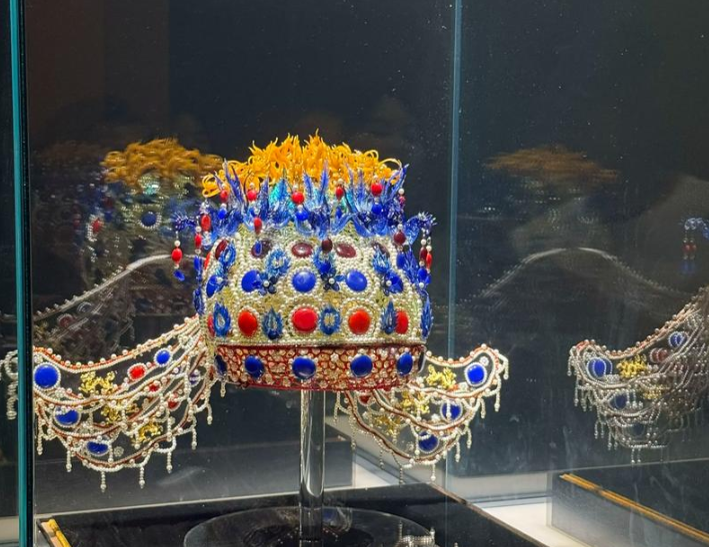
Recently, at the National Museum of China, a remarkable Liuli artwork captured widespread attention: a replica of the Ming Dynasty Empress Xiaoduan’s Nine-Dragon Nine-Phoenix Crown. Composed of 4,800 Liuli beads and nearly 5,000 individual components, the piece stood as a testament to both technical mastery and artistic vision.
Created by a new generation of artisans, the work reflects a deeper shift in the world of Liuli. Younger creators are not only preserving traditional techniques, but also redefining them—bringing fresh perspectives to a craft with thousands of years of history.
At the heart of this evolution lies Zibo, particularly Boshan, long recognized as the center of Liuli production in China. Since the Ming and Qing dynasties, it has earned a lasting reputation: “The finest Liuli in China comes from Zibo.”
From Revival to Renewal: How Liuli Finds New Life
Renewal is not only sparked by opportunity, but sustained by inner fire.
In recent years, the rise of Zibo as a cultural destination—fueled in part by the viral popularity of its local barbecue—has brought renewed attention to its museums, including the Zibo Ceramic & Liuli Museum and the Qi Culture Museum. Liuli, once displayed quietly behind glass, is now presented as a living, immersive cultural experience.
Yet attention alone is only a starting point. In a rapidly changing world, the true challenge lies in giving traditional craftsmanship new life. The answer lies in innovation.
For example, many Liuli artisans are integrating traditional Chinese techniques with Western glassmaking methods, breaking through the limitations of conventional forms. Their work introduces patterns and structures that resonate more strongly with contemporary aesthetics, while remaining rooted in tradition.
Beyond Trend: Connecting with a New Generation
However, the growing popularity of Liuli cannot remain at the level of fleeting trends or “check-in” experiences. To truly thrive, this art form must move beyond momentary attention and establish a lasting connection with younger audiences.
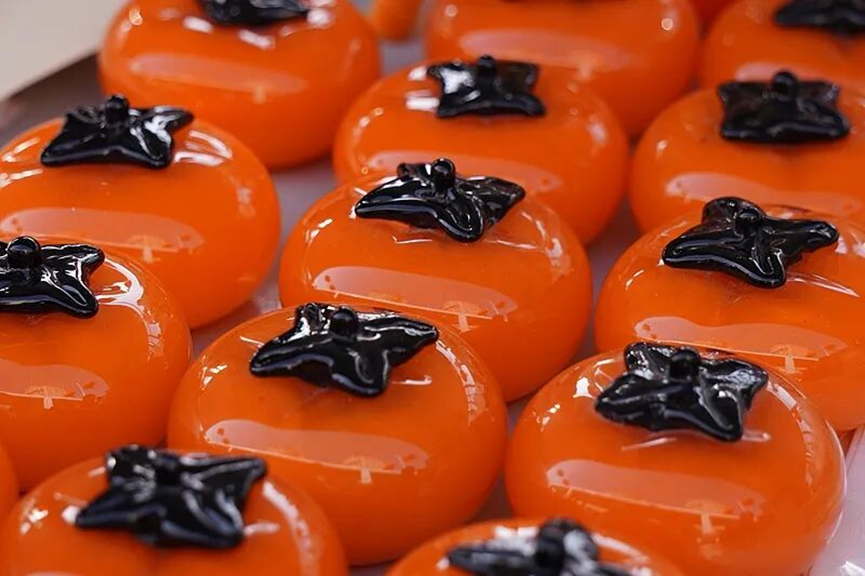
On one hand, there is a need to develop Liuli creations that combine modern design, practical function, and traditional craftsmanship—allowing this ancient art to naturally enter everyday life.
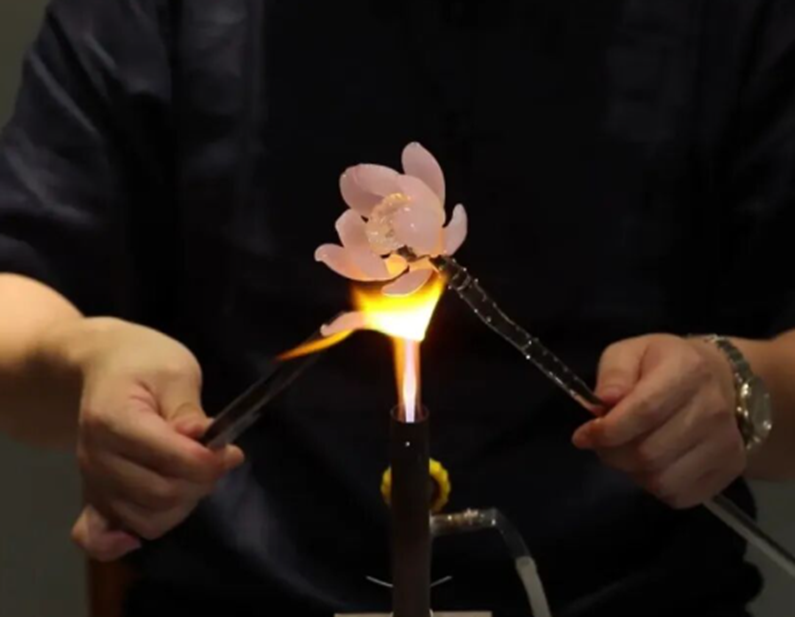
On the other hand, deeper storytelling is essential. Through documentaries and modern media, the intense beauty of high-temperature craftsmanship—the drama, precision, and artistry behind each piece—can be shared with a wider audience.
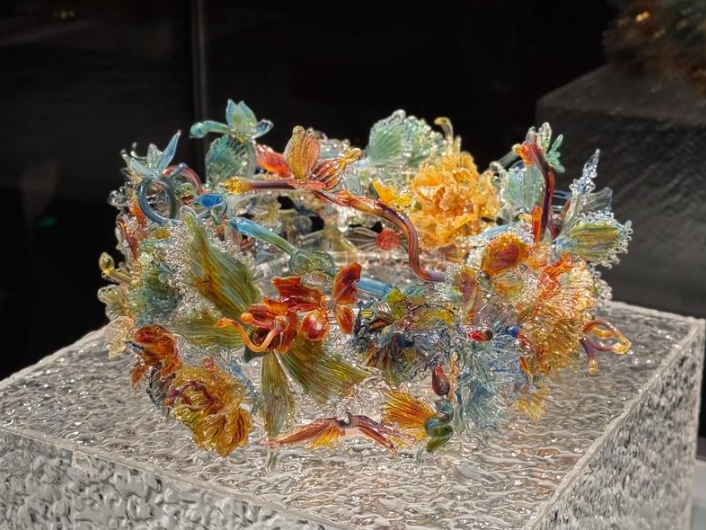
At the same exhibition, a work titled Butterfly Serpent Floral Crown by post-1995 artist Liu Yuan also gained widespread attention. The piece captures both the danger and poetry of working with molten glass—an emotional depth that resonates strongly with younger generations.
From Craft to Experience: When Liuli Becomes Part of Life
The true renewal of Liuli ultimately lies in experience and cultural connection.
Today, hands-on workshops, educational programs, and Liuli studios are becoming increasingly popular. People are no longer just observers—they are participants. By engaging directly with the process—feeling the heat, shaping molten glass, witnessing transformation—they gain a deeper understanding of the craftsmanship behind each piece.
This personal experience transforms into something more profound: a sense of value, identity, and emotional connection. Liuli is no longer just an object—it becomes part of one’s cultural memory.
The Future of Liuli
The soul of Liuli has been forged in the flames of kilns for thousands of years.
But its future lies ahead—in continuous innovation, immersive experiences, and its integration into everyday life.
At LUMILIULI, this philosophy guides everything we create. Each piece is not only shaped by hand, but also shaped by time, culture, and a commitment to reimagining tradition for the modern world.
Liuli is not simply preserved.
It is continually evolving.